
Teaching Healthy Musicianship
A discussion with Prof. Kristin Wolfe Jensen,
Dr. Anastasia Petrunina, and Dr. Austin Pancner
Feel free to start where you need
Definitions and Meaning
A common term that is used in music education is that of “musicianship.” This idea broadly refers to the skills, knowledge, and capabilities required for one to practice, perform, or appreciate music effectively.
Healthy musicianship furthers this definition by emphasizing the importance of understanding, maintaining, and prioritizing healthy physical, mental, and emotional relationships with music and music-making. It may also look like the intentional fostering of environments where healthy actions and relationships can occur naturally, and are encouraged and celebrated, since music-making is rarely an individual endeavor. You can read more about it here.
Q: What does Healthy Musicianship/Musician Wellness Mean To You?
“Healthy musicianship encompasses mental and physical health. More often than we know, the two are linked…Addressing Musician Wellness means looking at the big picture of one’s work/life balance and habits [and] A well-balanced life that addresses physical and mental health daily sets the stage for optimizing one’s relationship to music and the instrument.”
– Professor Kristin Wolf Jensen (KWJ)“To me, healthy musicianship is the process of creating conditions in which a student can develop artistic excellence without sacrificing physical or mental wellbeing… I want my students to play and enjoy music 20 years from now, so with that approach we can start identifying tools needed to have a successful and long career.”
-Dr. Anastasia Petrunina (AnP)“The term healthy musicianship is more about mindfulness and awareness more than anything…If you aren’t aware you’re doing something or you aren’t aware of something that may affect you…you’re going to be going in with your blinders on, essentially.”
–Dr. Austin Pancner (AuP)It’s one thing to learn about healthy musicianship and integrate it into your routine, it’s another thing to teach it in a way that actually changes the way students think, practice, and perform. Professor Kristin Wolfe Jensen, Dr. Anastasia Petrunina, and Dr. Austin Pancner have each taken on this challenge from distinct perspectives, balancing high-level performance with a commitment to pedagogy centered around well-being. Their varied backgrounds reveal not only different approaches to healthy musicianship, but also the complexities of teaching it effectively.
Rather than separating technique from wellbeing practices, integrating healthy musicianship into teaching largely requires an approach where they work together. The goal with this approach should not be to “fix” a student’s relationship with their instrument, but rather help students build habits that support both their playing and their long-term relationship with music.
It’s clear that there are several different approaches to teaching healthy musicianship, and within those approaches, there’s a lot of nuance and individuality. Because wellbeing is such a subjective concept, individualized to each person, there is no one “right way” to teach healthy musicianship. However, the trends of these three conversations focus on building connection, showing empathy, and fostering a desire to make music well without sacrificing personal health. Let these ideas be guideposts for you to explore healthy musicianship in your own teaching.
Healthy Musicianship
In Teaching
Q: What are some signs that you look for that may indicate a student is developing an unhealthy relationship with their instrument or practice?
“Injury is the most obvious sign that a student is developing an unhealthy relatinoship with their instrument or practice. [When injuries occur]... something needs to be modified immediately in terms of lifestyle including less practice, smarter practice, awareness in how they are moving and breathing when playing, and seeking treatment.”
–KWJ“Red flags I look for in students and their practicing are lots of body-connected issues such as improper muscle activation or improper breathing… It’s also a red flag when I know students are practicing a lot but they’re not getting anywhere or have any direction when they come to their lessons because… when you practice efficiently, it raises questions”
–AnP“I think of my student’s learning as different zones. In the center, you have their comfort zone, surrounding that is the discomfort zone, and outside of that is the panic zone… The best learning happens in the discomfort zone so… gauging where your students are on the model, especially if they’re in that panic zone, can provide insight into the relationship your student has with a certain skill or technique.”
–AuPQ: Are there any phrases or approaches you’ve intentionally moved away from or toward in your teaching, specifically regarding musician wellness?
“I have moved away from the word “posture” because many people hear that word and immediately sit or stand with tension and restricted breathing. ‘Finding dynamic balance’ is a much more conducive way to address how we use our bodies when playing or moving through the world… I often ask studdents to experiment with their technique (movement) to see what feels the easiest - The best technique is fluid and easeful and we often forget that as we play”
–KWJ “I’ve moved away from giving direct feedback and taking control of the lesson. The quality of curiosity and ability to evaluate your own playing… is a very valuable skill these days. It allows you to evaluate how you are feeling and thinking so that you can make progress”
—AnP“I have steered away from giving my opinion… What's more effective is guiding [students] to an answer through effective questioning so it feels more collaborative…When you frame things as an action, rather than ‘don’t do this,’ it’s more likely to be effective and stick in the long run.”
–AuPQ: What are one or two small things that teachers can do to shift their teaching to be rooted in healthy musicianship while still prioritizing musical excellence?
“Ask their students how they are doing and really listen and respond to the answer. Frequently students will say they are tired and that is an opportunity to look at lifestyle choices that contribute to that fatigue… If a student is unprepared, rather than just telling them to practice more, dig deeper into how they have been spending their time instead - and have empathy for whatever answer they give. If the student has been avoiding practice due to fear or frustration, discuss that too - where is the lack of motivation coming from? Can the teacher relate to that slump in motivation and share their own experience to humanize the situation?”
–KWJ“You have to teach by example… you have to know what works for you, what you can advocate for. I encourage students to take short breaks during their practice sessions to observe their bodies and thoughts. I encourage them to spend more time thinking than playing.”
–AnP“Ask a lot of questions… Maybe it’s a practice issue, maybe it’s a motivation issue, maybe it’s something external, but we can’t find ways to support and connect with our students if we don’t have an idea of what’s going on”
–AuPResearch to Practice
We are privileged to live in a time where information is everywhere. There is so much research done related to topics of health and wellness. Whether that research has been done on musicians or another group of people, it is possible to take insights from that data and turn it into tools for teaching. This is incredibly important because knowing research or data alone doesn’t change outcomes, but application does. When teachers actively translate ideas into practice, they make healthy musicianship accessible and actionable, rather than abstract. So how do we do that?
Q. What is your approach when you want to translate research into teaching and playing practices either for yourself or for students?
“I encourage my college students to read the research themselves…I try to model compassion in lessons, and help the student to have self-compassion and recognize when they need rest, or diversion, or perspective change. If a student expresses fatigue or frustration, we address that rather than pushing through.”
–KWJ“Try it out for yourself first or reflect on your own experiences with the data in mind…You can find large data or ideas and translate them into one or two small things to incorporate into your playing. If they work, then use them in your teaching.”
–AnP“Look for big-picture trends and keep track of what has worked and what hasn’t…There’s so much information out there and you can find research done on other groups of people that can translate quite nicely into your own playing and practice.”
–AuPAdditional Reading and Material
Teaching the Whole Musician by Paula Savvidou (Book)
Learn Faster, Perform Better: A Musician's Guide to the Neuroscience of Practicing by Molly Gebrian (Book)
The Musician’s Way by Gerald Klickstein (Book and Website)
⚘ ⚘ ⚘
“We must make health a priority because when we become unwell, our music making comes to a halt.”
-Gerald Klickstein, The Musician’s Way “Movement is life. Life is a process. Improve the quality of the process, and you improve the quality of life itself.”
—Moshe FeldenkraisAbout
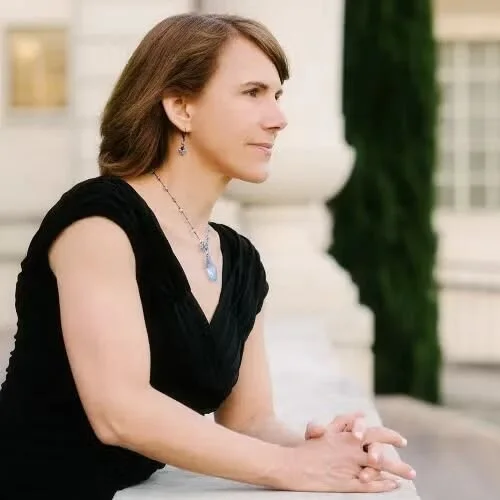
Kristin Wolfe Jensen
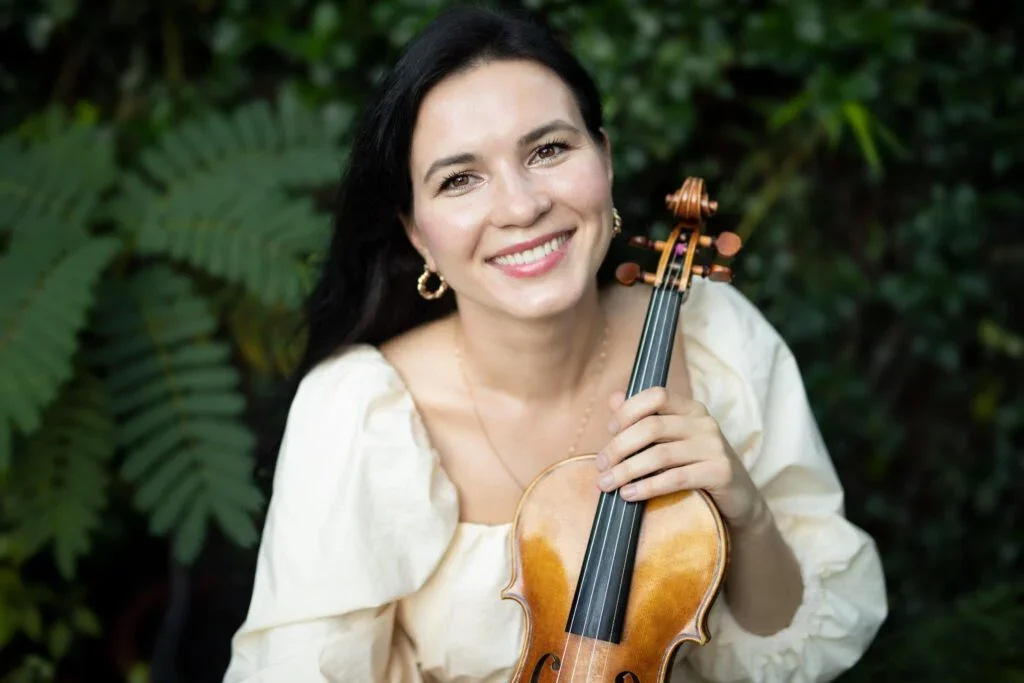
Dr. Anastasia Petrunina
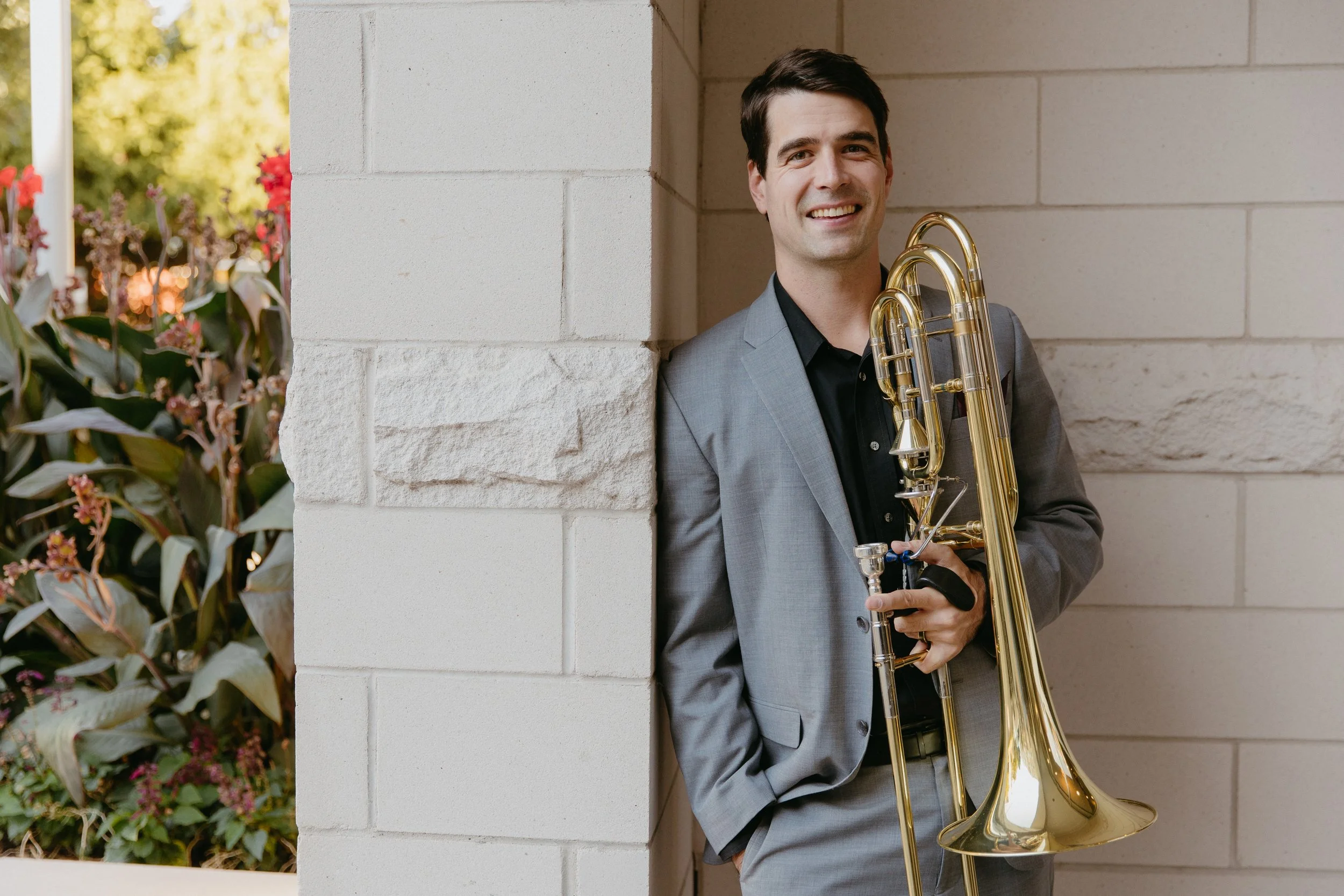
Dr. Austin Pancner
-
Kristin Wolfe Jensen has been Professor of Bassoon at The University of Texas at Austin Butler School of Music since 1995 and is also principal bassoonist with ROCO, on the faculty at the International Festival Institute at Round Top, and a licensed body mapping educator. She is the creator of the multimedia bassoon tutorial, MusicandtheBassoon.org and producer of the video series, The Herzberg/Kamins Reed Making Method.
The American Record Guide said about her solo CD, Shadings. “...She has simply turned in the finest-played bassoon recital I have ever heard”. Other critically acclaimed solo and chamber music recordings include …and Kristin Wolfe Jensen, Parables and Reflections, and Handel: The “Halle” Sonatas. Ms. Jensen has performed with the Dallas Symphony, The Houston Grand Opera, The Dallas Opera, the San Antonio Symphony, the Eastern Philharmonic, the Fort Worth Symphony, the Richardson Symphony, the Las Vegas Symphony, the Jupiter Symphony of New York and Continuum, and has given guest recitals and masterclasses at many major American music schools, and in South America and Europe. She has performed solo recitals at several International Double Reed Society conferences and was co-host of the 2005 conference in Austin.
Her former students hold major orchestral, military band and university faculty positions across the U.S. Prior to her appointment at UT, she was on the faculties of the University of Nevada, Las Vegas, and the University of North Texas. As a student, she won the concerto competitions at the Juilliard School of Music where she received her Master of Music degree, and at the Oberlin Conservatory where she received her Bachelor of Music and Bachelor of Music Education degrees, which led to performances of the Mozart Bassoon Concerto, k. 191.
-
Violinist Anastasia Petrunina has been recognized on stages worldwide, performing at such venues as Carnegie Hall and the Great Hall of the Moscow Conservatory as well as touring in Russia, France, United States, Brazil, Croatia, Hungary, Italy, Spain, Sweden, and China. A passionate educator, Anastasia has given masterclasses on five continents, eaching at various music institutions ranging from regional music schools to the prestigious Curtis Institute of Music. Her most recent concert appearances include the world premiere of ‘American Caprice’ written for her by an American composer Sheridan Seyfried, and performed with the Augusta Symphony and the North Charleston Pops Symphony.
Anastasia was a featured soloist with the Saint-Petersburg State Symphony Orchestra, Augusta Symphony, North Charleston Pops, Novaya Rossiya Symphony Orchestra, Yale Chamber Orchestra, Aiken Civic, North Georgia Chamber Symphony and ARCO Chamber Orchestras. She also took part in the recording of music for the Opening Ceremony for the Sochi Olympic Games in 2014. As a chamber and orchestral musician Anastasia collaborated with Anna Netrebko, Emmanuel Ax, Yo-Yo Ma, Maksim Vengerov, Gil Shaham, Efim Bronfman, Denis Matsuev and Gilles Apap. Dr. Petrunina served as a guest concertmaster for the Grand Opening of the Xian Opera House in China and has led the Guiyang, Charleston, Asheville, Savannah and Hilton Head Symphony Orchestras to name a few. She collaborated with conductors such as Valeriy Gergiev, John Williams, Osmo Vanska, Yoel Levi, Reinbert de Leeuw, Robert Spano, Yuri Bashmet and Peter Oundjian among others.
As a passionate proponent of contemporary music, Anastasia is a co-founder of ViMaDeAn Duo with her husband, percussionist Denis Petrunin. Together they commissioned over 20 new works for violin and percussion from internationally acclaimed composers and are currently working on releasing their debut CD which will be dedicated to the topic of environmental issues. Their most recent appearances include performances at the Del Mar International Composers Symposium in San Diego, CA and the Blue Lake Fine Arts Camp in Twin Lake, MI. Ms. Petrunina began her violin studies at the age of six after her family has moved to Kamchatka, Russia. Anastasia received her Bachelor’s degree at the Moscow Conservatory College and Master’s degree from the Yale School of Music. She also holds a Doctor of Musical Arts degree from the University of Georgia. Her teachers included Tatiana Kolchanova, Elena Demidenko, Syoko Aki and Levon Ambartsumian. When Anastasia is not performing on stage or practicing on her balance board, she can be found reading, cross-stitching or making desserts. She currently resides in Augusta, GA with her husband Denis and their adopted black cat Mimi.
-
Dr. Austin Pancner is a bass trombonist, educator, and founder of The Functional Musician, an education and coaching platform that helps musicians overcome chronic tension, pain, or other complex overuse injuries. His work sits at the intersection of performance pedagogy and applied movement science, translating complex concepts into practical systems that reduce tension, improve reseliency, and extend career longevity.
As a performer, Austin has held the Bass Trombone position with the Southwest Florida Symphony and has appeared with the Detroit, Cincinnati, Atlanta, and Indianapolis Symphony Orchestras. In parallel with his performing career, he is a national presenter and workshop facilitator, leading sessions for universities, conservatories, and festivals across the country. His teaching focuses on recovery, injury prevention, breathing mechanics, and movement efficiency, helping musicians bridge the gap between how they practice and how their bodies actually function during high stress events.
Austin works with clients both online and in person in Cincinnati, Ohio, where he coaches at a local gym, operating in the space between physical therapy and performance training, supporting individuals navigating pain, rehabilitation, and return-to-performance. Through The Functional Musician, he has worked with musicians internationally across all instruments and experience levels. He holds multiple certifications in strength and conditioning, nutrition, and various movement systems, and earned his Doctor of Music degree from Indiana University, where his research focused on musician health, performance-related injury risk, and wellness curriculum design.